

Operations Research and Behavioral Informatics
ORβIT develops decision methods for socio-technical systems in which actors respond on their own terms, conditions evolve, and the timing and sequencing of decisions determine what remains possible.
Research Projects
All projects Active
Climate adaptation is often assessed by asking whether a measure works under current conditions. CLIMACT asks when it works, for whom, and for how long.
 Active
Supply chains are increasingly designed under constraints that do not stay fixed. ReSolVe asks when a supply chain configuration remains viable as these conditions evolve, and when redesign becomes necessary.
 Active
Cycling-based delivery systems increasingly rely on algorithmic dispatch and routing, yet how riders actually respond to these decisions remains poorly understood.
In response to the growing demand for sustainable and efficient transportation, integrating freight and passenger services offers a promising solution. This project aims to design an integrated system that appropriately balances the priorities of the involved stakeholders.
Despite their obvious similarities, passenger and freight transport are usually planned and operated separately. This project explores how these systems can work together more effectively.
Selected output
All research output
People
All people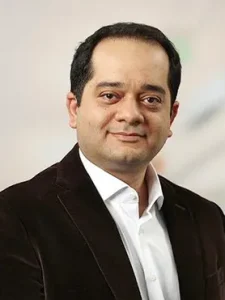
Yousef Maknoon
Associate Professor in the Faculty of Technology, Policy and Management at TU Delft. His research develops methodological approaches to decision-making, combining operations research, behavioural modelling and data-driven methods, with applications in transport, logistics and supply chains. Before joining TU Delft, he was a postdoctoral researcher at the Transport and Mobility Laboratory at EPFL and a postdoctoral fellow at Polytechnique Montréal–CIRRELT. He obtained his Master's and PhD in Industrial Engineering from Polytechnique Montréal.
View profile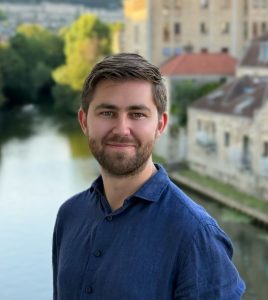
Patrick Stokkink
Assistant Professor at the Faculty of Technology, Policy and Management at Delft University of Technology. His research focuses on large-scale heuristic and exact optimization of socio-technical systems, with primary applications in transport and logistics. He obtained his Master's degree in Operations Research from Erasmus University Rotterdam and his PhD in Civil Engineering from École Polytechnique Fédérale de Lausanne.
View profileResearch Opportunities
Open positions, thesis topics and ads are posted here. A short note to either co-director is the best place to start.
News & events
All newsA lab symposium on the methodological shift in how logistics systems are planned and run.
ReadNew results on choice-driven matching and decomposition for large-scale mobility.
ReadA public talk on last-mile delivery safety and the behavioural trade-offs couriers face.
ReadGet in touch
Enquiries from students and partners are welcome.